Frederick's mosquito pressure is mostly container-bred, not swamp-bred. Asian tiger mosquitoes — the striped, ankle-biting daytime species most Frederick callers describe — breed in water that fits in a bottle cap, so…
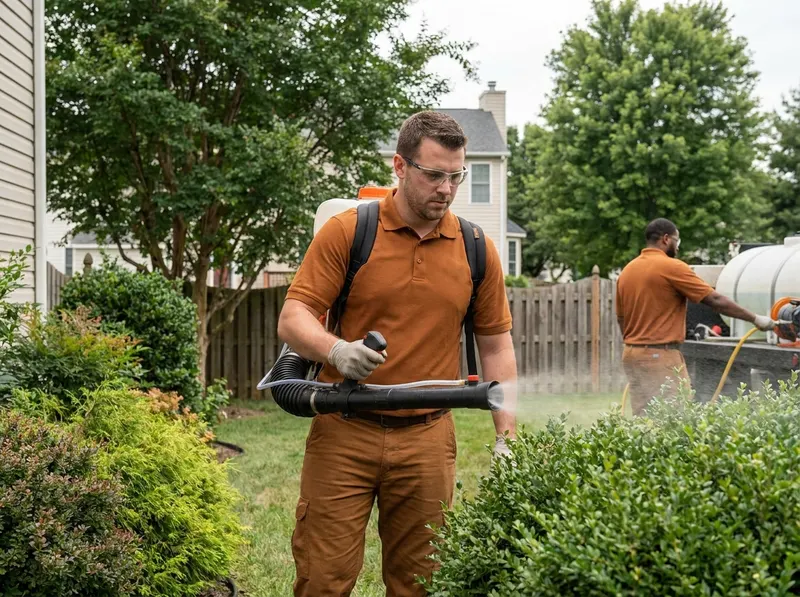
Frederick's mosquito pressure is mostly container-bred, not swamp-bred. Asian tiger mosquitoes — the striped, ankle-biting daytime species most Frederick callers describe — breed in water that fits in a bottle cap, so a corner of Baker Park's shade or a wooded rear lot is rarely the actual source. The source is usually on the property: a clogged gutter over a Downtown Frederick Historic District rowhome porch, a tarp fold, a birdbath, a saucer under a potted fig, a sagging pool cover, or the corrugated downspout extension buried in mulch. That is why our first visit is a hunt, not a spray. We count and photograph the water we find, treat what can't be drained, and hand you the short list of what to dump weekly. Barrier spraying without source reduction is the reason DIY foggers only bought you a week.
Ticks work on a different map. Blacklegged (deer) ticks and lone star ticks in Frederick County live in humidity — leaf litter, ground ivy, stone walls, and the first ten to twenty feet of the shaded transition between mown lawn and woods. Homes in Tuscarora Knolls, Clover Hill, Villages of Urbana and the wooded edges near Gambrill State Park and the Frederick Municipal Forest see deer walk the same trail nightly and drop ticks along it. Treatment concentrates on that band, not the open lawn, and it works better when the litter is raked back and the grass line is held tight. Nymphs — the poppy-seed-sized stage that causes most bites — peak in late spring and early summer, so an early first visit matters more than a heavy one in August.
When a per-visit treatment fits: you host a graduation party in Spring Ridge or a fall wedding shower off Carroll Creek Park and want three quiet weeks. When a seasonal program fits: you have kids or a dog using the yard daily, a shaded lot in Worman's Mill or Amber Meadows, or a border on standing water or open field. The honest trade-off is that adult mosquito treatments are temporary by design — they knock down what is here now and hold roughly three to four weeks, so recurring visits are how you keep a yard usable, while drainage fixes and habitat trimming are what shrink the problem permanently. We would rather cut your visit count by fixing the water than sell you more visits.
A yard program is also the wrong answer sometimes, and we will say so. Bites happening indoors overnight in Ballenger Creek or Hillcrest are more often fleas or bed bugs than mosquitoes. Small flies swarming a basement drain are not mosquitoes at all. A tick found on a dog in December came off an animal, not the lawn. If the inspection points somewhere else, we treat somewhere else. Products are applied per label directions and we ask you to keep kids and pets off treated foliage until it dries; we confirm that window on site before starting. Frederick Health Hospital and the county health department are the right call for a bite reaction — our job is the yard.
Every job gets a firm, written price after a free on-site visit.
Tell us about your mosquito and tick yard program job in Frederick and we'll send a clear, written quote — usually the same day.
 Lumetra Pest Control Service