We identify the insect before we treat anything. Termite damage and carpenter ant damage look similar to a homeowner with a flashlight, and swarming termites get mistaken for flying ants every spring. The inspection…
We identify the insect before we treat anything. Termite damage and carpenter ant damage look similar to a homeowner with a flashlight, and swarming termites get mistaken for flying ants every spring. The inspection settles it: termite mud tubes are pencil-thin soil tunnels running up masonry, the galleries inside damaged wood are packed with soil, and shed wings collect on windowsills and near basement light fixtures. In Frederick, swarms typically show up on the first warm, damp afternoons from March into May. If you swept up wings in the basement of a Downtown Frederick Historic District rowhome or found soft trim behind a Baker Park porch, that is the evidence worth a look.
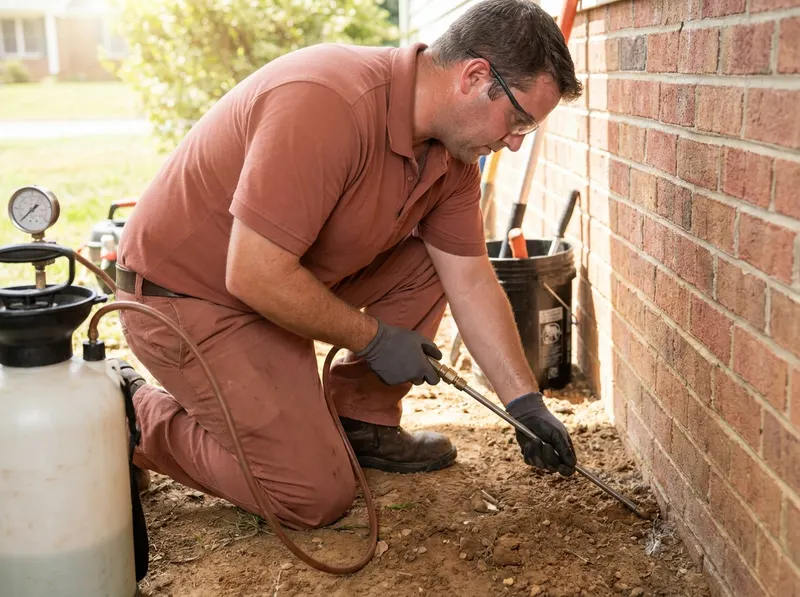
The two real choices are a liquid soil barrier or a bait station system, and the right one depends on the foundation you have. A liquid treatment means trenching the soil around the perimeter, drilling through slabs and patio or stoop concrete where needed, and applying a termiticide so treated soil surrounds the structure. It works fast and is the usual pick for slab-on-grade houses in Ballenger Creek, Spring Ridge and Villages of Urbana, where the perimeter is accessible and mostly uninterrupted. Bait stations go in the ground every ten feet or so and rely on foragers carrying the active ingredient back to the colony. Baits are slower — colony reduction takes weeks to months — but they suit properties where trenching is impractical: dry-laid stone foundations and old additions in the historic district, homes with wraparound hardscape, or a lot on the wetter, low side of a Monocacy River bottom where soil disturbance is a problem. Baits also come with ongoing monitoring, which some owners want and others do not.
Spot treatment versus full perimeter is the other trade-off. A single active porch column, a garage door frame, or one crawlspace pier in a Worman's Mill or Amber Meadows home can sometimes be handled locally for a few hundred dollars. That is genuinely cheaper, and it is honest to offer it — but it treats one entry point on a colony that may have several. Full perimeter work costs more and addresses the whole structure. We will tell you which one the inspection supports rather than defaulting to the bigger number.
Conditions around a house usually explain how termites got in, and fixing them protects the treatment. Mulch piled above the siding line, downspouts dumping at the foundation, firewood stacked against the garage, deck posts set straight into soil, and grade that has crept up over the brick course are the repeat offenders in Tuscarora Knolls, Hillcrest and Clover Hill. Crawlspaces along Carroll Creek and the older streets near Hood College often hold enough moisture to keep a colony comfortable year-round. Exclusion and moisture correction are part of the written plan, not an upsell. Treated soil around a slab keeps working for years when it is not disturbed, so we also mark where landscaping, French drains and future fence posts should avoid.
On safety and contracts: termiticides go into soil and drilled voids at the exterior, not sprayed across living areas, and we will tell you plainly which product goes where, what the re-entry interval is, and how far to keep treatment from vegetable beds. One-time-fix pricing is published alongside optional annual monitoring, so nothing is hidden behind a 12-month agreement.
Every job gets a firm, written price after a free on-site visit.
Tell us about your termite treatment job in Frederick and we'll send a clear, written quote — usually the same day.
 Lumetra Pest Control Service