Frederick's housing mix creates two very different rodent jobs. In the Downtown Frederick Historic District and the older streets around Baker Park, we're usually dealing with mice moving through 19th-century…
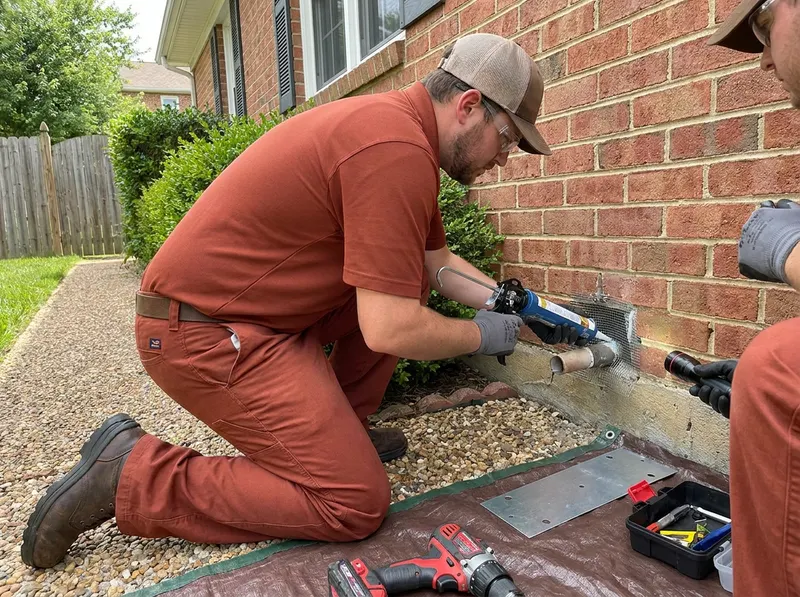
Frederick's housing mix creates two very different rodent jobs. In the Downtown Frederick Historic District and the older streets around Baker Park, we're usually dealing with mice moving through 19th-century stone-and-brick foundations, shared party walls, and basement stairwells — openings that were never square to begin with, plus gas and water lines cut through masonry decades ago. Behind the restaurant alleys off Carroll Creek Park, the species shifts: Norway rats hold burrows near dumpster pads and travel along foundation lines after dark. In the newer subdivisions — Spring Ridge, Worman's Mill, Villages of Urbana, Tuscarora Knolls, Clover Hill — the house is tight but the details leak. The three we find most often are the bottom corners of the garage door where the seal has curled, the sill-plate gap behind brick veneer weep holes, and the unsealed dryer vent or A/C line chase. A mouse needs a quarter-inch gap. If you can slide a pencil in, that's an entrance.
The honest decision is trapping-only versus trapping plus exclusion. Trapping-only makes sense in a narrow case: a single mouse that wandered in from the field edge after mowing, no droppings anywhere but one drawer, no history. It's cheaper and it's often enough. Exclusion is what stops the problem from returning, and it's the right call if you've been resetting hardware-store traps for more than a couple of weeks, if you hear scratching in the same ceiling area on consecutive nights, or if you're finding droppings in more than one room. The trade-off is real: sealing costs more up front than a bag of bait, and on a Ballenger Creek or Amber Meadows home with a slab, an attached garage, and multiple utility penetrations, the sealing labor is the bigger half of the invoice. What you're buying is the last visit instead of a monthly one.
Bait alone is the approach we're most cautious about, and we'll tell you why on site. A rodent that dies inside a wall void in a Hillcrest split-level becomes an odor problem and a fly problem three weeks later. We prefer interior trapping we can retrieve and count, with tamper-resistant exterior stations used only where placement makes sense around the structure — a decision we make with kids, dogs, and backyard vegetable beds in view. You do not need to leave the house for rodent trapping and sealing.
Season matters in Frederick County. The first hard cold snap in October pushes mice off the field edges near Monocacy National Battlefield and the wooded margins toward Gambrill State Park and into crawlspaces and garages within days, so late September through November is the heaviest call window. Spring brings the second wave, usually rats in older downtown blocks after landscaping and alley work disturbs burrows. If you're prepping a home for sale and an inspector flagged droppings in the attic or crawlspace, tell us at the call — exclusion documentation and a verified follow-up is what closes that item, and it's a different scope than routine service.
Every job gets a firm, written price after a free on-site visit.
Tell us about your rodent control and exclusion job in Frederick and we'll send a clear, written quote — usually the same day.
 Lumetra Pest Control Service